Ask ten homeowners what they paid for a new roof and you will get ten different answers. That is not because anyone is lying. Vinyl roofing cost depends on so many small things that a single price tag almost never tells the full story. So instead of throwing one big number at you, let me walk through what actually moves the price, and where people usually get surprised.
What you are really paying for
When a contractor quotes you for vinyl (PVC) roofing, the bill is basically three buckets. First, the material: the vinyl sheets themselves, plus the glue, flashing and edge pieces that hold everything down. Second, labor: the people who clean the roof, lay the sheets, and weld the seams with a hot-air tool. Third, everything around the job, like removing the old roof, disposal, permits and small repairs to the surface underneath.
Most people only picture the first bucket. The second one is often the biggest, because welding seams properly is slow, careful work and not every crew does it well.
Rough price ranges
Prices change a lot by country, city and season, so treat this as a ballpark and not a promise. In many markets, a fully installed vinyl roof lands somewhere around 5 to 12 dollars per square foot. A small porch or garage roof can cost a few hundred to a couple of thousand. A full flat roof on a family house can run into the low-to-mid thousands, sometimes more if the deck needs repair.
The only way to know your real number is to get quotes from people who have actually climbed up and looked at your roof.
What pushes the price up
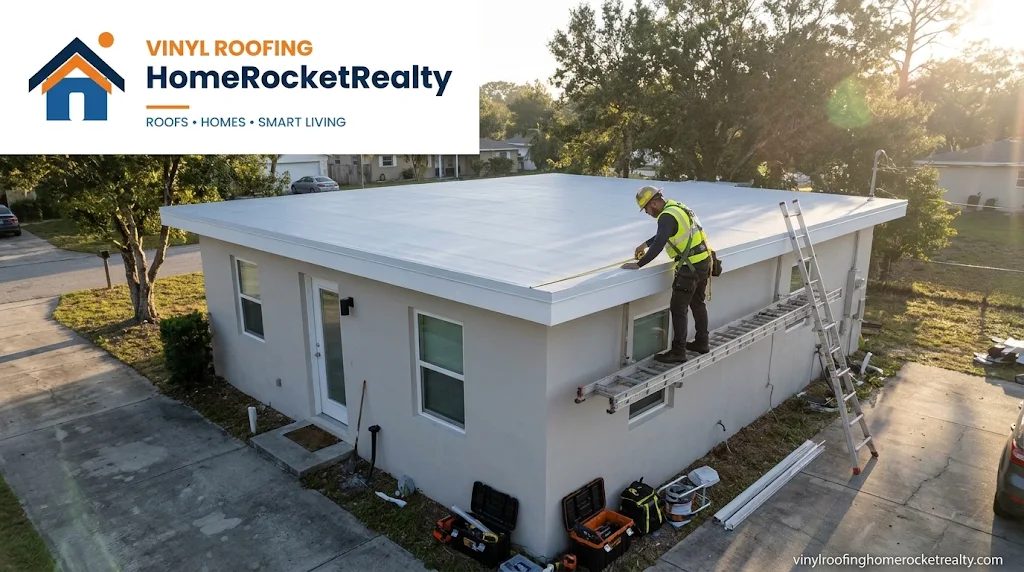
- Roof size and shape. More corners, vents, skylights and edges mean more cutting and more welding.
- Membrane thickness. Thicker vinyl costs more but resists punctures better. For a roof people walk on, it is usually worth paying for.
- Condition of the deck. If the wood underneath is soft or wet, it has to be fixed first. Nobody wants a new roof over rotten boards.
- Old roof removal. Tearing off layers takes time and creates waste to haul away.
- Access. A tall building, a tight street or no space for materials adds labor hours.
- Insulation upgrades. Adding insulation boards while the roof is open is smart, but it adds to the total.
The hidden costs people forget
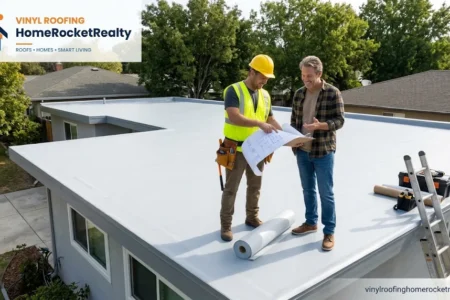
This is the part that causes arguments later, so read it twice. Ask whether the quote includes disposal of the old roofing, new flashing around pipes and vents, drip edges, gutters or drainage fixes, and any permit fees your area requires. Also ask what happens if the crew finds damaged wood once the old roof comes off. A good contractor will explain the price per sheet of plywood before work starts, so there are no shocks.
Simple ways to save money
You do not need to cut corners to spend less. A few honest tricks work well.
- Get three written quotes and compare line by line, not just the bottom number.
- Book in the off season. Many roofers are quieter in cooler months and may give better rates.
- Fix small problems early. A patched leak costs very little. A rotted deck costs a lot.
- Choose a lighter colour. It reflects heat and can lower your cooling bills for years.
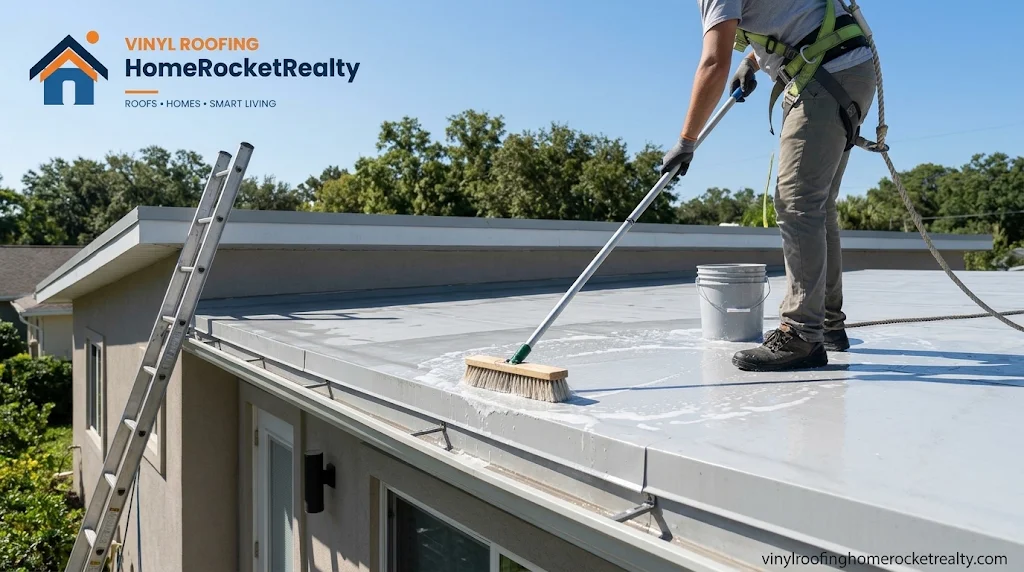
- Do the easy prep yourself, like clearing the area, moving furniture and cutting back branches, if the contractor agrees.
One thing I would not do is pick the cheapest quote by default. If one price is far below the others, there is usually a reason: thinner material, no warranty, or skipped steps.
Is vinyl worth the money?
For flat and low-slope roofs, I think it often is. A properly installed vinyl roof can last 20 years or more with basic care, it handles rain well because the seams are welded, and it asks for very little upkeep. When you divide the price by the number of years you will not need to think about the roof, the yearly cost looks pretty reasonable.
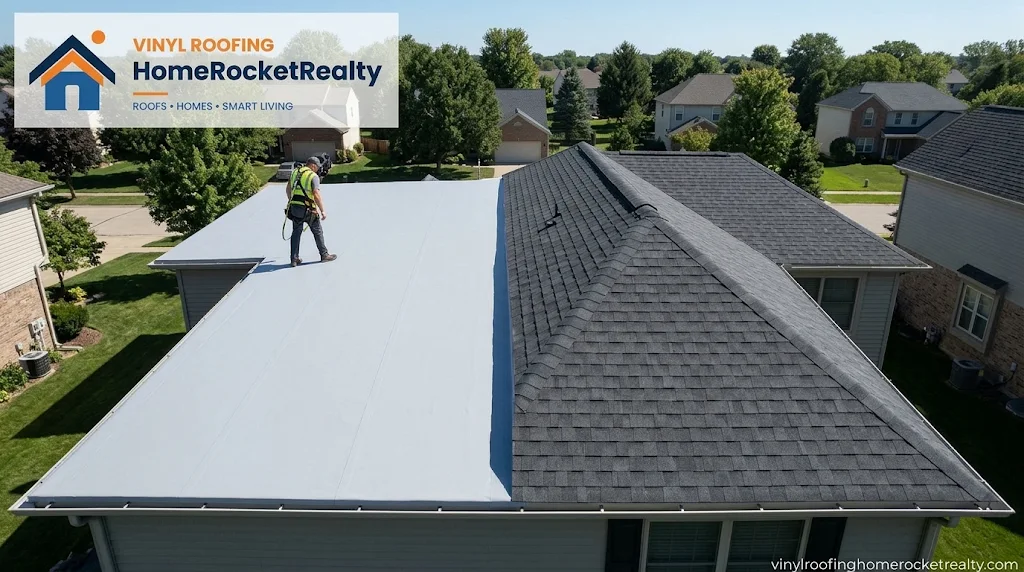
It is less ideal on steep roofs, where other materials fit better. That is where an honest contractor will tell you the truth, even if it means a smaller job for them.
Questions to ask before you sign
- Is the quote written, with materials and thickness listed?
- How long is the warranty on the material and on the labor?
- Who welds the seams, and have they done this before?
- What is the plan for drainage so water does not pool?
- What is not included in this price?
If they answer calmly and clearly, that is a good sign. If they dodge, keep looking.
Final thought
Vinyl roofing cost is not one fixed number. It is a mix of size, material, labor and the condition of what is underneath. Spend an hour collecting quotes, ask the awkward questions, and keep a folder with your receipts and photos. That small effort protects your money, and it will help you when it is time to sell the house too.