Technology in homes has changed more in the last ten years than in the previous fifty. But here is the catch: not every gadget deserves a place in your house. Some save real money and stress, and others just sit in a drawer. In this piece on modern technology homerocketrealty readers keep asking about, I will go through seven upgrades that actually make sense, and how to pick the right order.
1. Smart leak sensors
A tiny sensor placed near a washing machine, water heater, sink or under a roof hatch can send an alert to your phone the moment it detects water. They are cheap, easy to install, and can save you from the kind of damage that costs thousands. If you only buy one smart device this year, make it this one.
2. A smart thermostat
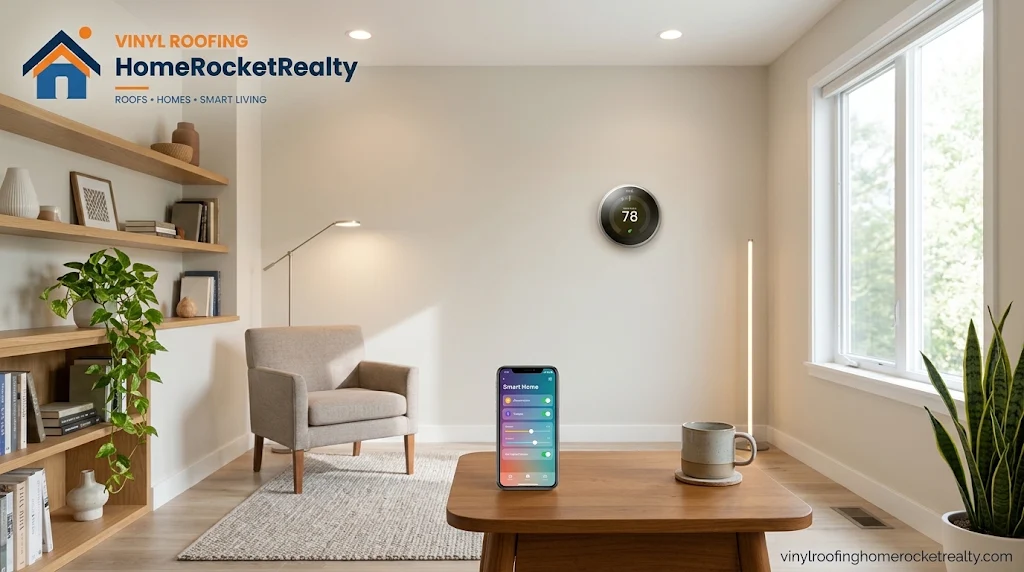
Heating and cooling are usually the biggest part of an energy bill. A smart thermostat learns your schedule or follows the one you set, and avoids heating an empty house. Many households see a modest drop in energy use. It is not magic, but it pays for itself slowly and quietly.
3. LED lighting everywhere
This one is not flashy, but it is the easiest win. LED bulbs use far less power and last much longer than old bulbs. Start with the rooms where lights are on the longest, like the kitchen and living room. Add motion sensors in corridors and outdoor areas and you will stop paying for lights nobody is using.
4. A solar-ready roof
You may not be ready to buy solar panels today, and that is fine. But when you replace or repair your roof, ask the installer to plan for solar. Flat roofs with a vinyl membrane can often be prepared for panels later if the layout, drainage and load are considered early. Doing this planning during the roof job is far cheaper than redoing things afterwards.
5. Reflective roof surfaces
A light-coloured roof reflects more sunlight and can keep indoor temperatures lower. In hot regions this can reduce how hard your cooling works. It is one of those modern technology homerocketrealty tips that costs little extra when chosen at installation time, and nothing in daily effort.
6. Smart locks and cameras
If you travel often or have family coming and going, a smart lock and a doorbell camera add convenience and peace of mind. Be sensible here. Choose well-known brands, use strong passwords, and turn on two-step login. Gadgets that connect to your Wi-Fi need the same care as your bank app.
7. Better insulation
Okay, insulation is old technology, but modern materials are much better than what builders used decades ago. Roof insulation boards and sealed gaps around windows and doors keep indoor air where you want it. If you are already working on the roof, this is the cheapest moment to improve it.
How to decide what to buy first
Use a simple three-question filter before spending any money.
- Does it protect the house? Leak sensors and good roofing come first.
- Does it lower a bill I already pay? Thermostat, LEDs and insulation belong here.
- Does it make daily life easier in a way I will really use? Locks and cameras might, if you travel or have a busy household.
If the answer to all three is no, skip it, however clever the advert looks.
Mistakes people make with smart homes
- Buying too many brands. Devices that cannot talk to each other become a headache. Stick to one or two ecosystems.
- Ignoring Wi-Fi strength. A weak signal makes smart gadgets frustrating. Check coverage first.
- Forgetting updates. Install software updates so security holes get closed.
- Skipping the manual. Five minutes of reading saves an hour of confusion.
- Chasing trends. If you do not need it, do not buy it.
A realistic budget plan
You do not have to do everything in one year. A sensible plan could look like this: leak sensors and LED bulbs first, since they are low cost and high value. Next, a smart thermostat. Then plan roof upgrades such as reflective surfaces, insulation and solar-ready layouts when the roof is due for work anyway. Cameras and locks can come last, when you have the budget and a clear need.
Think about privacy
Smart devices collect information, like when you are home, which rooms you use and what your camera sees. Read what each app collects, switch off features you do not need, and avoid sharing live camera links. A smart home should make you feel safer, not watched.
Final thoughts
Good home technology is boring in the best way. It works in the background, saves a little money every month and protects you from nasty surprises. Start with the small, practical items, add upgrades as your budget allows, and keep reading modern technology homerocketrealty updates so you can spot the genuinely useful ideas among the noise.